
August 28, 2026 · Maintenance
What to Ask Your Letting Agent About a Loud Fire Door and Creaking Floorboards in an HMO
The fire door closer has adjustable screws that can stop the slam, and talcum powder can quiet floorboards. Here's what to ask your letting agent in an HMO.

The first time I managed an HMO, I learned that a slamming fire door is never just a door. It’s a 6 a.m. alarm clock and a midnight fight starter. You’re not overreacting. You’re hearing the same thing every tenant in that room below hears.
In a UK HMO—a house in multiple occupation, rented by three or more people from more than one household sharing a kitchen or bathroom—fire doors are often required by law. That door isn’t just heavy for the fun of it. It’s built to resist fire for a set period, usually 30 minutes, and the closer at the top is there to make sure it shuts behind you every time.
The fire door closer is adjustable—but don’t touch it yourself
The closer is that metal box at the top of the door. Inside it are two small screws. One controls the swing speed as the door closes from wide open. The other controls the latching speed—the final click that can sound like a gunshot in a quiet hallway.
You can absolutely ask the letting agent to adjust that latching screw so the door closes firmly but quietly. I've had maintenance techs do this dozens of times over the years. The screw is often marked with a small S for swing and L for latch. A quarter turn counter-clockwise on the latch screw can change a bang into a soft thud.
Don't do it yourself. A fire door must close fully every time. If you slow it too much, it might not latch, and then the fire safety feature fails. Never wedge the door open, and never stick padding onto the striker plate or the frame—that can stop the door from closing in a fire. In an HMO, fire doors are not optional decoration. I'm not a lawyer, but every local authority I've dealt with treats a wedged fire door as a serious breach. Check your local rules if you're unsure.
Creaking floorboards: ask for an inspection, but try talcum powder now
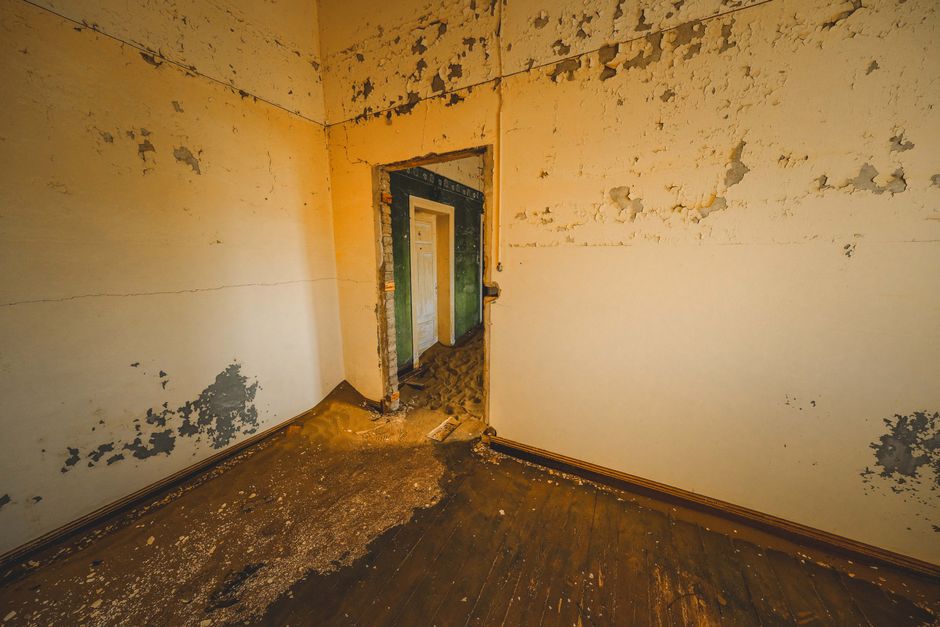
Creaking floorboards in an old HMO are usually the boards rubbing against each other or against nails that have worked loose over decades. The noise travels straight down to the room below.
Your letting agent is responsible for repairs under the tenancy agreement, and floorboards that make walking a nightmare count as a maintenance issue. Ask them to send someone to lift the boards and re-fix them. While they're there, they can check for loose joists. That's the proper fix.
While you wait, dust talcum powder into the gaps between the floorboards. I've used this trick in my own units. The powder acts as a dry lubricant, letting the boards move a hair without squeaking. Sweep it into the cracks, walk on it a few times, then sweep up the excess. Put a thick rug over the worst strip. It masks the squeak for a week or two, which can make the house liveable while the agent books a repair.
When a housemate ignores you, escalate to the agent

A housemate ignoring a polite request is normal in shared houses. People tune out, they get defensive, or they simply don't believe it's their problem. Pushing them harder will make things worse.
Send a factual email to the letting agent. Include the dates you noticed the noise, what you've already tried—talking to the housemate, maybe the talcum powder—and ask specifically for the fire door closer to be adjusted and the floorboards to be inspected. Keep it short. No accusations, no list of grievances.
Keep a record of your email. If the agent doesn't respond within a reasonable time, you can use the letting agency's complaints procedure, or contact your council's private sector housing team about the fire door. Fire safety issues in an HMO get attention fast.
When I managed shared houses, I learned to treat a slammed fire door as a maintenance request. Leave the personality clash out of it. Get the closer adjusted, get the boards checked, and let the agent manage the housemate. That's what their fee covers.