
August 12, 2026 · Leasing
Is a 6.5-Foot Basement Ceiling a Deal Breaker for Renters?
No formal studies exist, but after decades managing rentals, I can tell you exactly how a low basement ceiling hurts rentability and what to do.

So you’re looking at a basement suite with a 6.5-foot ceiling and wondering if anyone will rent it. I’ve been there. Over the years, I managed a few basement units, and I quickly learned that ceiling height is one of those things that sounds minor on paper but makes a huge difference in real life. The short answer? There are no formal studies that give you a clean percentage, but from my experience and what building codes tell us, a 6.5-foot ceiling is going to be a deal breaker for the vast majority of renters.
No Studies, But Codes Give Us a Clue
First, let’s address the research question directly: I’ve never seen a peer-reviewed study that asks renters, “Would a 6.5-foot ceiling stop you from renting?” Real estate surveys rarely drill down to that level of specificity. However, we don’t need a formal study to know the answer, because building codes already tell us what’s considered habitable.
In much of Europe, the minimum ceiling height for a habitable room—a space where people sleep, eat, or spend significant time—is about 7.5 feet (commonly 2.3 meters). In the United States, the International Residential Code (IRC) generally requires at least 7 feet for habitable rooms, though local amendments can vary. A 6.5-foot ceiling is below both standards, which means in most jurisdictions you cannot legally rent that space as a bedroom or living area. I’m not a lawyer and this isn’t legal advice, but if you’re thinking about renting out a basement with a ceiling that low, your first stop should be your local building department and a qualified attorney to understand what’s allowed.
What 6.5 Feet Actually Feels Like

Numbers aside, let’s talk about the human experience. A 6.5-foot ceiling is only 78 inches. The average adult male in the US is about 5 feet 9 inches tall—many men are over 6 feet. That means anyone taller than about 6 feet 3 inches would be brushing their head or ducking under light fixtures, ductwork, or beams. Even if you’re shorter, the room feels closed in. Natural light is already scarce in basements, and a low ceiling makes it worse by casting deeper shadows and making the space feel cramped.
Practical problems pile up too. Standard interior doors are 6 feet 8 inches tall; a 6.5-foot ceiling means the top of the door frame is very close to the ceiling, which looks odd and limits trim options. Ceiling fans are out—they hang too low. Most floor lamps are out. Bunk beds? Forget it. Even a standard bookshelf or wardrobe might feel towering and unstable. The space simply doesn’t function like a normal room, and tenants pick up on that within seconds of walking in.
Who Might Rent It Anyway?
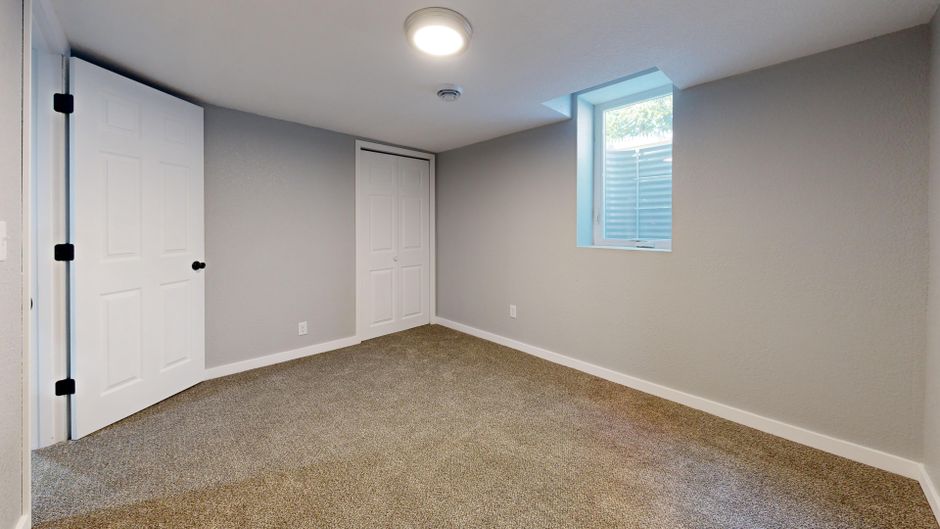
In a tight rental market, there’s always someone desperate enough to take anything. I’ve seen basement suites with low ceilings rented to college students on a shoestring budget, or to someone who just needs a place to sleep and doesn’t care about aesthetics. But here’s the reality: that tenant is not your ideal long-term renter. They’re likely to move as soon as they can afford something better, which means higher turnover, more vacancy days, and more wear and tear from frequent moves.
And you won’t get market rent. Even in a strong market, a suite with a 6.5-foot ceiling will command a discount—sometimes a significant one. The pool of applicants shrinks dramatically: families won’t touch it, anyone with claustrophobia won’t, taller people can’t, and anyone with a budget for a nicer place will pass. You’re left with a small slice of the market that is both price-sensitive and less stable.
My Advice If You Own a Basement Like This

If you already own a basement with a 6.5-foot ceiling, here’s what I would do—again, not legal advice, just my practical take. First, measure the actual height in every room. Sometimes the ceiling varies; maybe the main room is 6.5 feet but a closet or bathroom is even lower, while a hallway might be higher because of a dropped soffit. Be precise and transparent in any listing: don’t hide the low ceiling, because you’ll waste your time on showings and get angry feedback.
Second, consider whether the space could be legally used for something other than living space. Many basements with low ceilings are fine for storage, a workshop, a laundry room, or a home gym—uses that don’t require a habitable space permit. If that’s an option, you might rent it as storage or include it as part of an upstairs unit, which can be more valuable than trying to pass it off as an apartment.
Third, if you’re determined to make it a rental suite, talk to a structural engineer about the possibility of raising the ceiling. Sometimes you can gain a few inches by removing a dropped ceiling, rerouting ductwork, or even underpinning the foundation—but those are major, expensive projects. In most older basements, you’re stuck with what you have.
Finally, if you can’t meet the local minimum ceiling height for habitable space, do not rent it as a bedroom or living area. Not only will you struggle to find tenants, but you could also face code violations, fines, or even liability if a tenant is injured or complains. It’s not worth the risk.
The Bottom Line
A 6.5-foot basement ceiling is a serious handicap, not a minor quirk. You might find a tenant, but you’ll deal with longer vacancies, lower rent, and higher turnover. If you’re building or buying, aim for at least 7 feet of ceiling height in any basement you plan to rent—preferably 7.5 feet or more to make it feel like a real home. And if you already have a low ceiling, be honest with yourself about what that space can realistically be.